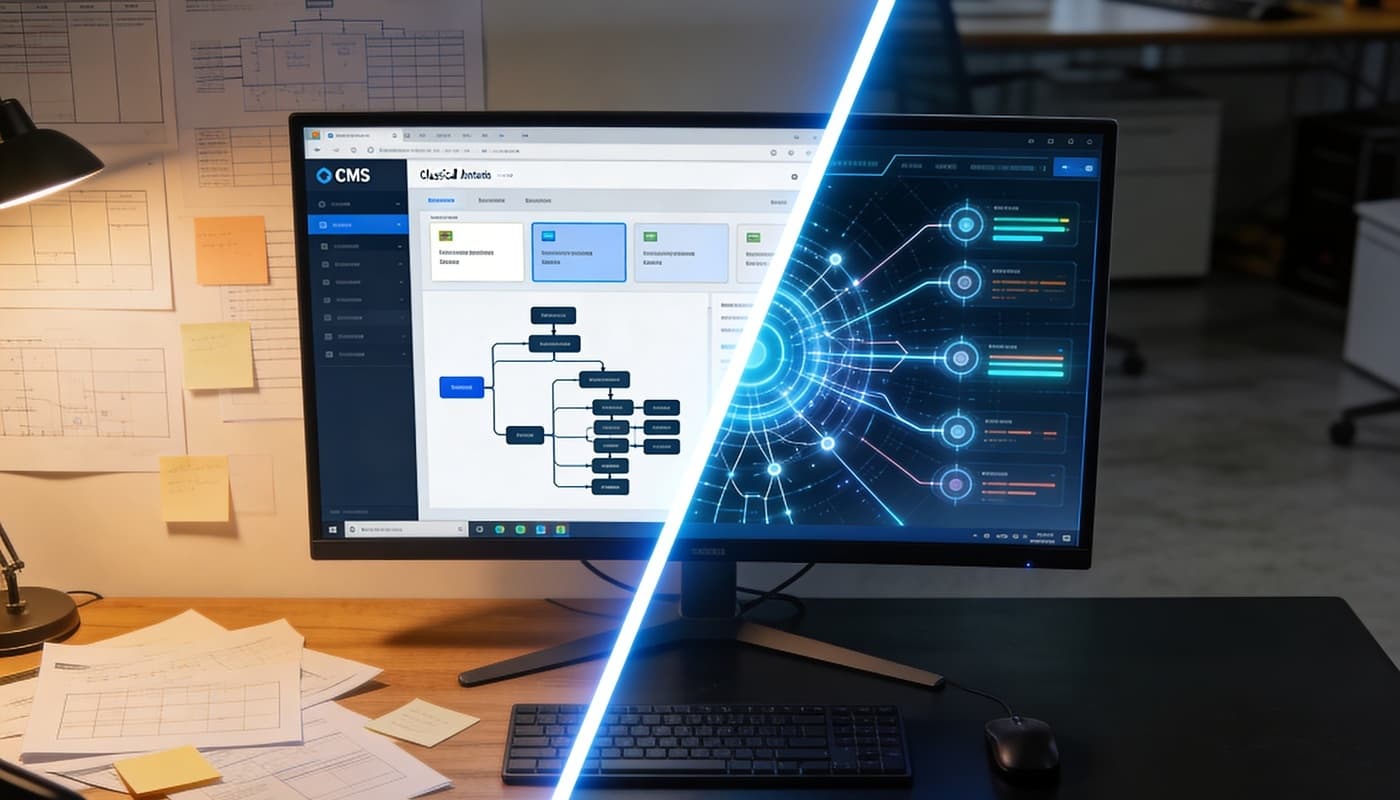
Headless Architecture: Why Your Next Upgrade Should Be a Rebuild
If your organization is contemplating a major system overhaul, you've likely encountered the term "headless architecture" in vendor pitches and industry discussions. But beyond the buzzword lies a fundamental shift in how enterprises can build, scale, and adapt their digital infrastructure. This isn't just another trend—it's a strategic decision that separates organizations that can pivot quickly from those that remain locked into legacy constraints.
At ClearPath Consultants, we've guided dozens of enterprises through this transformation. The decision isn't always straightforward, but for the right organizations, it's transformative.
Understanding Headless Architecture: More Than Separation
To grasp why headless matters, we need to clarify what it actually means. Traditional monolithic systems—your all-in-one ERP, CMS, or commerce platform—bundle the presentation layer (the "head") with the business logic and data infrastructure. Everything is tightly coupled. Headless architecture decouples the presentation layer entirely, allowing you to serve content and functionality to any frontend through APIs.
Think of it this way: a traditional system is like a restaurant that only serves food in its dining room. Headless is like a restaurant with a central kitchen that can serve food through a storefront, delivery apps, catering events, and a food truck simultaneously. The core operation remains the same; the delivery mechanisms are infinitely flexible.
Why headless architecture is the future for enterprises. — Vercel
This architectural approach isn't new—APIs have existed for decades—but cloud infrastructure, standardization of REST and GraphQL protocols, and the rise of composable enterprise platforms have made headless genuinely viable at scale.
The Headless vs. Traditional Showdown
The choice between headless and traditional isn't binary; it's about matching architecture to business needs. Understanding where each excels clarifies the decision.
Traditional monolithic systems excel when:
- You need a unified, integrated system with minimal customization
- Your technology roadmap is stable and predictable
- Your organization has limited development resources
- You're prioritizing simplicity over flexibility
Headless architecture wins when:
- You need to deliver experiences across multiple channels (web, mobile, IoT, voice, AR)
- Your business model requires rapid experimentation and iteration
- You want to replace individual components without rearchitecting everything
- You need independent scaling of different system components
- You're building for an API-first ecosystem where partners integrate with your platform
Unlock advantages of headless CMS for future-ready teams 2026 | Acquia
The performance implications matter, too. Headless systems can reduce frontend load times significantly because you're not serving bloated monolithic systems to lightweight devices. A mobile app doesn't need the full accounting module; it needs transaction data through a clean API.
Tangible Benefits Beyond Architecture
The appeal of headless extends beyond technical elegance. We've observed several concrete advantages across our client base:
Scalability with precision. Monolithic systems require you to scale everything when one component hits capacity limits. Headless lets you scale the API layer, the content delivery layer, or the compute layer independently. One financial services client meaningfully reduced infrastructure costs after moving to headless because they could right-size each component independently.
Faster innovation cycles. Without being bound to quarterly releases from a monolithic vendor, teams can iterate on frontend experiences independently. A retail client we worked with reduced time-to-market for new digital channels from 6 months to 6 weeks.
Vendor agility. Locked into an expensive enterprise system? Headless allows you to migrate away from individual components incrementally. You're not replacing a $10 million system overnight; you're swapping out the CMS, then the commerce engine, then the analytics platform—each on your timeline.
Future-proofing. Your business will evolve. Headless systems accommodate emerging channels and technologies without architectural rewrites. This matters as organizations navigate AI integration, composable commerce, and whatever comes next.
Where Organizations Trip Up
Headless isn't a panacea, and we've seen implementations stumble when teams overlook critical considerations.
Governance and API sprawl. Without disciplined API design and management, you'll end up with dozens of inconsistent endpoints that become impossible to maintain. We worked with a manufacturing company that accumulated 150+ internal APIs before implementing API governance standards. The cleanup cost more than the original build. Establish governance before you build.
Complexity in other places. Headless doesn't eliminate complexity; it shifts it. Instead of managing one monolith, you're managing the orchestration between multiple services. You need stronger DevOps capabilities, better monitoring, and more sophisticated deployment strategies. Organizations with immature development practices often underestimate this burden.
Data consistency challenges. When systems are distributed, maintaining data consistency becomes genuinely difficult. A travel client we advised experienced booking inconsistencies across channels until they implemented proper event-driven architecture and distributed transaction management.
Team structure misalignment. Headless requires different teams (frontend, backend, integration) to work more independently but in concert. Organizations with siloed teams often struggle. You need product owners who can coordinate across boundaries.
How We've Helped Organizations Navigate This Transition
We don't just advise on architecture; we've been in the trenches with clients executing these transformations. Here's how we typically approach it:
Strategic Assessment. We audit existing systems, document current capabilities, and map them against business objectives. This reveals whether headless is actually the right answer or whether optimization of existing systems would be more prudent. Sometimes the answer is "wait two years."
Phased Migration Planning. We develop roadmaps that separate components intelligently. One pharmaceutical client we worked with migrated their content management system first (lower risk), then their commerce engine, then their analytics platform over 18 months. Each phase improved processes and reduced risk for the next.
API Architecture & Design. We establish API standards, design patterns, and governance frameworks before development begins. This prevents the sprawl problem we mentioned earlier.
Technology Stack Optimization. We help clients select appropriate headless platforms—whether that's Contentful, Shopify Plus, custom microservices, or a hybrid approach. The choice depends entirely on your specific constraints.
Organizational Readiness. This is often overlooked but critical. We assess whether teams have the necessary skills (or willingness to develop them) and help structure teams around headless realities.
One financial services client we worked with spent six months in planning and governance establishment before writing a single line of production code. That investment prevented millions in rework later.
Actionable Next Steps
If you're considering headless, here's what we recommend:
-
Audit your current systems. Document every integration, every customization, every pain point. This becomes your roadmap.
-
Define your success metrics. Is this about speed? Cost? Flexibility? International expansion? Your answer shapes architecture decisions.
-
Assess organizational readiness. Do your teams have API-first experience? Can they operate in distributed environments? Be honest about capability gaps.
-
Pilot strategically. Don't migrate your core system first. Start with a non-critical component to learn before betting the company.
Headless architecture represents genuine strategic optionality for enterprises willing to invest in the discipline it requires. It's not right for every organization, but for those in rapidly evolving markets with multi-channel demands, it's increasingly difficult to ignore.
If you're evaluating whether headless makes sense for your organization, we'd welcome the conversation. Our team has mapped this terrain across financial services, retail, manufacturing, and technology sectors. Let's discuss whether a headless rebuild should be your next move.

Chief Technology Officer
Raymond brings over 15 years of experience leading enterprise technology transformations. Before joining ClearPath, he architected cloud migration strategies for Fortune 500 companies and led engineering teams at two successful SaaS startups. He specializes in helping mid-market businesses modernize their technology infrastructure without disrupting operations.